


Don’t get fined for watering your lawn! The Problem The metropolis of Denver is in its most serious water shortage in decades. Denver Water’s reservoirs stood at 67% of capacity on Oct. 12, compared with a typical 90% for this time of year. Officials warn they could fall to 55-60% before spring runoff. The cause is a snowpack that peaked early at about 58% of normal, followed by an unusually warm March that sped the melt and left dry soils absorbing much of the runoff. In response, Denver Water declared a Stage 1 drought in March, added drought pricing in May, and banned lawn watering and all spray irrigation on Oct. 1, its first such ban in nearly 25 years. Fines start at $500 for single-family homes and $1,000 for multifamily and commercial customers, with repeat violations risking shut-off. Water use is down 34% from the five-year average, but officials say sprinklers should stay off in spring 2027, and a full refill would take a winter with snowpack above 150% of normal. Denver Water has already issued nearly 300 citations and $175,500 in fines as of mid-October. The reservoirs sit in the mountains west and southwest of the metro area. On the South Platte, Cheesman, Eleven Mile Canyon, Antero, and Strontia Springs lie in Douglas, Jefferson, and Park counties. On the Colorado River side, Dillon, Williams Fork, and Gross hold Western Slope water carried through tunnels under the Continental Divide. South Denver is affected differently depending on the utility. Much of the south metro is served by separate providers, each with its own rules. Earlier this year, Aurora adopted Stage 1 restrictions limiting watering to two days a week, Highlands Ranch set a goal of cutting use by 15-20%, and customers of the Southgate, Parker, and Northern Douglas County districts in Lone Tree and Parker were placed under restrictions. Because rules vary by address and have changed through the season, residents should check their own provider for current requirements. Permaculture: A Solution Weather abnormalities are increasing and will continue to increase. Does it make sense to maintain a grass lawn under such conditions? What if you could drought-proof your home with a beautiful home garden instead? Don’t worry, we’ve been preparing for just such circumstances. Permaculture design offers a unique solution to Denver’s water crisis, providing sustainable home landscaping solutions. I can work with you to turn your property from a liability to a productive home garden system. Imagine some of the best and most efficient technologies from throughout human history woven into a single set of practices, organized around patterns specific to your site. Your lawn can retain water rather than using it. It can feed people instead of needing to be fed with fertilizers, pesticides, and other amendments. My designs emphasize thoughtful attention to the energy flows in a site, from wind to water to animals and sunlight, organizing infrastructure to capture flows and build wealth on site. I pay careful attention to the depth and richness of soil to create fertile ecosystems to improve life on site. Then, the design connects all these features to create rich and abundant systems to provide for you and your family, year after year. Each design starts with a careful analysis of the factors at play on-site, beginning with economic and relational variables, the impact of other stakeholders (e.g., neighbors), and risk factors (e.g., flooding), before identifying environmental factors like dominant winds, sunlight, rainfall, and weeds. My work as a clinical psychologist keeps me aware of personal and interpersonal dynamics that could jeopardize a design system, helping me establish holistic solutions for you and your property. Permaculture design systems are more intensive up front as we establish healthy systems that become increasingly self-sufficient for years to come. For example, cardboard from frequent online shipments may be identified as a site problem that can become a resource, by shredding it into bedding substrate. This can then be used in an appropriately sized bird coop system, producing fresh eggs on site. The mixture of manure and cardboard can be added to a compost pile, where it is converted into a usable garden substrate, providing fresh compost amendments for raised bed gardens. Food scraps from the garden can then be integrated back into the system, closing the loop. Once such systems are established, they become part of the normal home system that users are comfortable using, like taking out the trash and doing the dishes. Another useful system for the water shortage is rainwater catchment, which can be done either in containers or directly in the soil, which is the most efficient. Increasing your site’s ability to hold, store, and slow the spread of water means we can rely less on water pumped in from external reservoirs. You won’t need to worry about watering fines if your garden holds and stores enough water on its own. Food produced on site can help lower your house’s energy footprint and grocery bill while providing a sense of purpose and security as economic variables affect store shelves. Following the egg shortage in 2025, I installed a quail coop on my own property to avoid being caught without eggs again. The same is true for vegetables. Plus, it feels good to produce for yourself! If you’re concerned about the Denver water shortage or want to turn your home property into a lush and verdant landscape, book a permaculture design consultation today. I offer hourly consultations or whole-site designs and may be willing to discuss sliding scale rates for those who need financial assistance. I’m happy to offer a free 15-minute consultation call here: https://calendar.app.google/eSuucwPjUUpDhS8SA . Dr. Jesse Fister is a certified permaculture designer trained under Geoff Lawton and a licensed clinical psychologist. This article is general information, not a substitute for a site-specific design or guidance from your water provider. A free 15-minute consultation call is available at the link above. References Denver Gazette. (2026, October 15). Denver Water reservoirs fall to 67% amid drought, watering ban. https://www.denvergazette.com/2026/10/15/denvers-reservoirs-dwindle-to-two-thirds-capacity/ Denver Water. (2026). Denver Water supply and water use update. https://www.denverwater.org/tap/denver-water-snowpack-and-water-supply-update CBS Colorado. (2026). See the places in the Denver area and Northern Colorado where watering restrictions are in place, or could be soon. https://www.cbsnews.com/colorado/news/watering-restrictions-colorado-denver-area-northern-colorado/ Hashtags #Permaculture #DenverWater #WaterShortage #Drought #LawnAlternatives #RainwaterHarvesting #HomeGarden #Colorado #Sustainability #Homesteading

In one of my recent videos, someone commented that psychologists should not talk about religion. While I understand his perspective, this article explains why I disagree. Psychology is the study of the soul. It focuses primarily on the thoughts and feelings of individuals. It is many things at once: an academic research subject, an entire subject-field of public writing, and a licensed profession. It creates a bona fide and unique relationship between two or more human beings. It is also something people can use introspectively to help themselves. Psychology differs from theology in an important way. Whereas theology focuses on one’s relationship to God, psychology focuses on the relationship to one’s self and others. James Hillman made this point in his book Suicide and the Soul, arguing that while theology concerns itself with moral implications of the act of suicide, psychologists are concerned with listening to and understanding what causes a person to feel suicidal. We go through the process with them, understandingly, without a moral, medical, or legal objective. He uses this fact to argue that psychology is in the best position to treat the meaningful contents of a person’s specific suicidal thoughts, drives, and behaviors. In that sense, and from the start, there can be no subject that is off-limits for psychology. It often happens that the context and content of people’s suffering is saturated in religious ideas, language, and experience. In fact, in my years as a psychotherapist, I find that it is more likely that someone will talk about religion than not at some point in the therapeutic relationship. This makes sense, since only 29% of people in America claim to be unaffiliated with a religion. Were I to try and avoid religious conversations in my clinical work, I would ward off a great deal of content my clients bring, turning many away at the door. Religion can be no more avoided than sexuality or politics in the life of an individual. Now, there is a difference between being open to having such conversations and specializing in them. The latter is what I do. But before I get into that, let’s unravel the kind of thinking that leads someone to think that religion is off-limits for psychology. This belief comes from the scientific view of objectivity, bolstered by ethical concern. It makes sense. Psychologists don’t give medical advice because they aren’t trained as physicians. We don’t offer financial advice because we weren’t trained to do so. We avoid voicing political opinions because this impedes the client’s will and adversely impacts the therapeutic relationship. Why is religion different? It isn’t! The key here is that psychologists aren’t about giving advice, except about things they specialize in professionally—e.g., methods for coming out of a panic attack. Medical problems, finances, politics, and religion do belong in psychotherapy. We just don’t tell you what to do about them. In fact, our 3,000 hours of supervised training helps us offer just this kind of objectivity. And let’s be clear—no one is perfectly objective. That’s not a possibility, even when we’re calculating your IQ score from hard data during a well-controlled assessment. What we are trained to do is to recognize our own biases by continuously reflecting on ourselves through introspection, consultation, and our own personal therapy. Furthermore, we are trained to recognize when something is too triggering for us or is too close to home such that it might impact our ability to be objective. Professionalism is about knowing when to say “I can’t help you with that” or making a referral. The result is not a cold, calculated relationship, but one in which even the imperfections of the therapist provide opportunities for the client’s healing. We step out of the way enough to let you find your own path forward. Heidegger called this “leaping ahead” vs. “leaping in,” providing an authentic form of care that does not impose what I think and believe onto you. Therapists are humans first. That means we enter the work with our own beliefs about life, finances, marriage, God, work, and politics. Our training is to ground our clinical practices in rigorous theory to avoid causing harm. A specialist is usually someone with extensive personal experience coupled with specific professional training. An autism specialist may be autistic themselves. A chronic illness specialist may have a history of colitis. And a spiritual or religious therapist may have extensive personal experience as a former evangelical pastor’s son and grandson. You might ask if my personal experiences cause a kind of close-up blindness that makes it hard for me to see things clearly and objectively. There can be truth in that, which is why my own years of personal development have been critical to my success as a therapist. It has been 20 years since my own religious crisis. Bearing that in mind, I often find that my own intimate knowledge of people’s religious experiences helps me guide them through their own journey safely and effectively in ways that someone without such experience could not. It is the same as how a former alcoholic may be best positioned to relate to the cravings and thought processes of another alcoholic, so long as they have done their work. Personal development still is not enough. Specific professional development and credentials are also needed to establish credibility. In my case, that comes through having earned a master’s in transpersonal studies (e.g., the science of spirituality) and obtained a Spiritual Guidance Mentorship Training certificate (SGMT). Atop this, my clinical training as a depth psychologist prepared me well to handle the symbolism, metaphor, and myth of religious experience and its adjacent clinical presentations in trauma, psychosis, and existential crisis. My goal is never to tell my clients what to believe. It makes no difference to me whether someone becomes more or less religious, changes their beliefs, reaffirms their faith, or questions it. I love going through the process with people as they explore doubts, struggles, trauma, and confusion about their religious or spiritual experiences. It allows me to use the best of my personal experiences and training to help others. This is the opposite of what many people have experienced in their faith or spiritual practice—where they were told in no uncertain terms, what to think, believe, or do. I will talk about this more in my next article on what makes the therapy I offer different from faith-based counseling. Dr. Jesse Fister is a licensed clinical psychologist providing therapy and assessment services across forty states through PSYPACT, and the author of Soul to Soil. This article is educational and reflective, not clinical advice. If you’re interested in working together, you can schedule a free consultation at jessefister.com. Hashtags #Psychology #Religion #Spirituality #Psychotherapy #DepthPsychology #FaithTransitions #ReligiousTrauma #TranspersonalPsychology #JamesHillman #Heidegger #MentalHealth
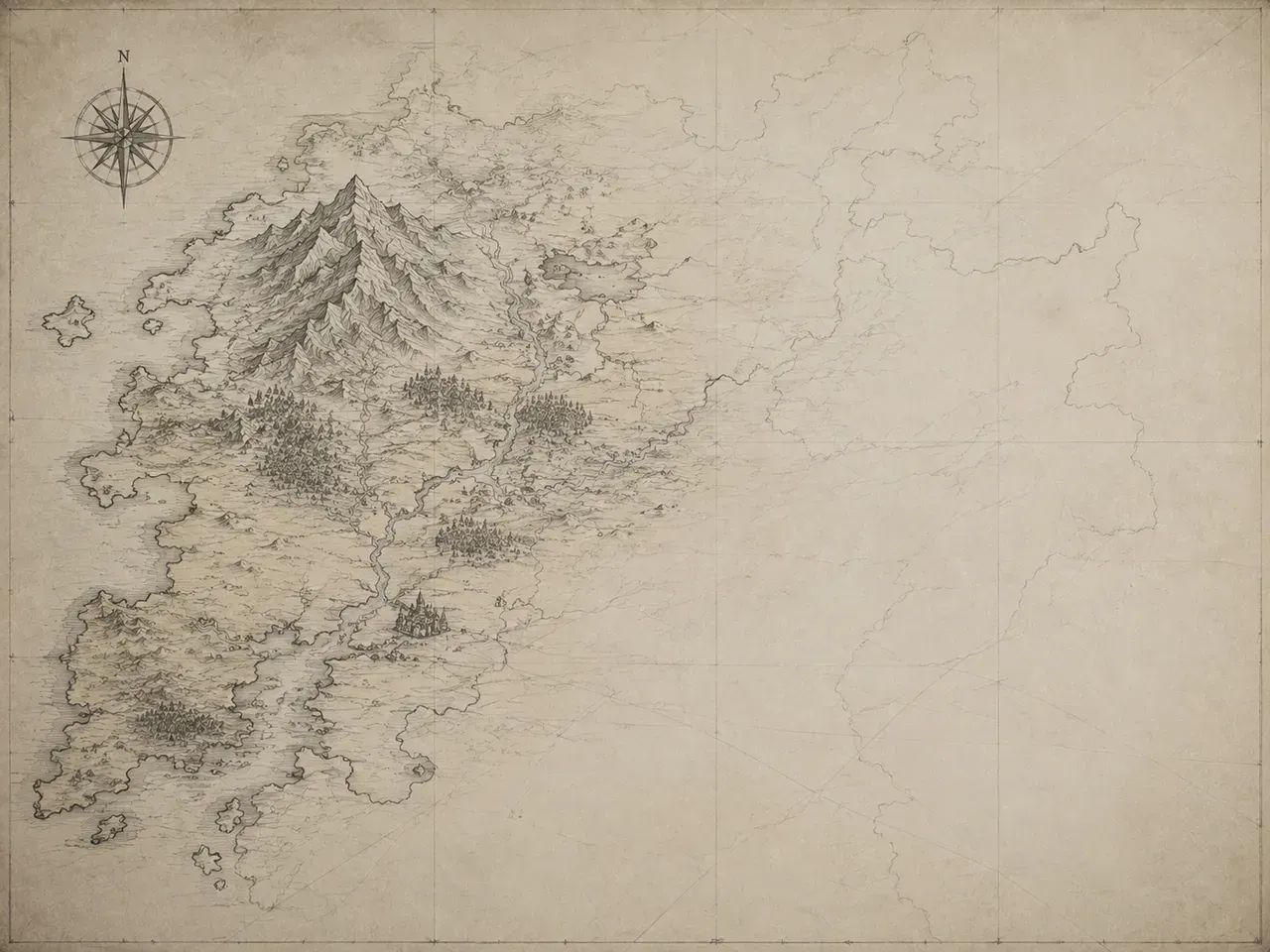
What would the world be like if everyone took time to understand their worldview deeply, from the bottom up? I believe each of us would benefit from attempting this at least once in their lifetime. Move everything you know and understand aside and start from scratch, with a fresh piece of paper. The sooner the better, because otherwise you live according to assumptions. The adage that “the unexamined life is not worth living” applies. Until you understand where your beliefs come from, you cannot know what forces guide your actions and decisions. You will be controlled by forces and ideas you don't understand. When the car breaks down, it is time to look under the hood to diagnose the engine. Even if it doesn't, it's worth knowing things are in good running order. Otherwise, you may find yourself on the side of the road asking: Why did I marry this person? Why aren't my children talking to me? Am I truly happy? I often define psychological suffering as the distance between belief and reality. You experience internal conflict whenever what you believe does not align with what is. Your troubles and questions can lead you to new solutions, but only if you follow through and stay with these problems long enough. Sometimes, the solution to theological or spiritual problems is a new outlook on an old problem, altogether. For example: If God is good, then why does injustice happen in the world? Why do the leaders in my spiritual religious practice act in harmful or controlling ways? Why does following this religious or spiritual path seem so hard? It makes a world of difference whether your views of justice were developed during childhood or after reading and contemplating the works of great thinkers in human history. The quality of your views will reflect these differences. Often, our most basic assumptions are invisible and have never even been challenged, like the hidden foundation of a house. Even beliefs like 'the Bible is true' or 'God is real' rest on invisible assumptions about the nature of the universe and how we obtain truth. The scientific method, for example, only acknowledges truth that is measurable, repeatable, and observable. Whether we look to a holy book, religious leader, scientific study, or personal experience for truth is influenced by our earliest assumptions. No matter how fundamental the truth, we can always ask: how do you know? This can be disorienting. The solution is not moral relativism, which is the belief that all truths are equal. But to ground ourselves in something stable and enduring requires additional effort. Which brings me to one of the most important questions we can ask: Where to begin? The question is an orienting question, like picking up a new map for the first time. Or better: drawing a new map. If I were to draw a new map, I might decide that north is up based on magnetic north while accounting for magnetic declination, which is the number of degrees difference between 'true north' and 'magnetic north.' Whichever north I pick determines the accuracy of the map for a given purpose. If I account for magnetic declination in my map, then map users will also need to account for that difference when using the map. I can also decide scale, what constitutes the center of the map, and many other details besides. Which is to say, in cliché, that the map is not the terrain. It is always and only a representation of the terrain. And how people interpret the map will determine how successful they are in using it. Holy books such as the Bible, Quran, or Torah claim to be spiritual maps. Moreover, they are often treated as the definitive map, arguing that other maps are false. Even if we decide that one map is superior to others, we must understand clearly why that is. Other traditions, such as Kundalini yoga or Taoism, even treat the body as a map to the divine. Who's got the right map? Moreover, some religions place greater urgency on finding the way. For Christians or Muslims, urgency is high because we have one life to make the right decision with an eternity of consequences. For certain Hindus or Buddhists, we have lifetimes to achieve enlightenment. Science, when it is treated like a religion, has no goal except growth and advancement of technology or knowledge for human edification. For mental health, the most important question is not what you believe but how you believe it. If your beliefs are rigid, shallow, and cause suffering for yourself or others, then it may be important to change your relationship to that religion or spiritual practice. My goal is never to tell you what to believe or practice but to help you look at why and how. If you're interested in learning more about how I work or to see if I might be a fit for you in therapy, please schedule a confidential 15-minute call to see if I can help you. Dr. Jesse Fister is a licensed clinical psychologist (Colorado #PSY.0006964) who works with people navigating religious trauma and faith transitions, in Colorado and, through PSYPACT, in many other states. This article is for reflection and education, not therapy or clinical advice. References Korzybski, A. (1933). Science and sanity: An introduction to non-Aristotelian systems and general semantics. Lancaster, PA: International Non-Aristotelian Library Publishing Co. Plato. Apology, 38a. Hashtags #ReligiousTrauma #FaithDeconstruction #Worldview #Epistemology #DepthPsychology #SpiritualCrisis #ExEvangelical #Psychotherapy #SoulToSoil

In the last article, I wrote about the risk people take when beginning to question their faith or spiritual practice. Of course there’s more to the story, including the fact that some religions teach that asking questions puts eternal life at risk. I will return to talk more about that sometime. Today, I’d like to talk about what happens when someone starts thinking deeply about life, the universe, and their place in it. Re-evaluating one’s beliefs from the ground up is a task worth undertaking at least once in a lifetime, despite the risk. Why? Because belief affects every aspect of life. Your sense of right and wrong, what you value or ignore, whom you marry, befriend, or reject. Worldview has enormous consequences. Why wouldn’t we want to assess ours critically to ensure it is not causing harm to ourselves and others? I would go as far as to say that we each have an ethical responsibility to ensure our views are not hurting anyone. In the early 1800s, prior to the end of the civil war, many religious people believed black people were inferior to white people. That belief caused extensive harm to others, often at the hands of the church, backed by scriptures such as Ephesians 6:5. Today, few Christians believe it is acceptable to own slaves. What other beliefs might be causing harm today? Furthermore, this is one of the best ways to begin to move from religious practice toward real spiritual experiences. The way up is sometimes down, because what limits us often comes from below. What does this mean? Imagine a tree growing inside a tin can. Try as we might, the tree will never reach its full potential, because the container it lives within is too small to support a healthy root structure, causing it to dwarf. The metaphor is this: sometimes, the best thing we can do to support spiritual growth is to ensure the wellbeing and expansion of the roots. Another analogy. Imagine I wanted to fly to Mars and set a course. A one-degree error in my calculations could result in being millions of miles off course (2.4 million, to be exact). Much easier to fix the error at the beginning of the trip than to try to correct your course later. Beginnings have exponential power in determining outcomes. Spiritual potential is not always addressed by forward motion. It is sometimes addressed by returning to the roots, going back to the basics, the foundations, the first principles. As Ender said in Ender’s Game: “the goal is down.” So, what comes first? This is the most important question when revisioning a worldview. It is also the thing most often stressed by fundamentalism. Fundamentalism establishes the what-comes-first clearly and returns to these foundations again and again. For evangelicals: Jesus was real, the Bible is true, and God is a triune being, among other principles. But how we get to those principles is even more interesting, and it takes us outside of theology proper and into pre-theological issues. This addresses how we take up or interpret theological teachings that are presented to us. It makes no sense to tell someone how to interpret a verse if they don’t believe it holds weight in the first place. The person who treats the Bible as the divinely inspired Word of God expects to find truth in it. The person who treats it as a cultural and historical artifact takes it as a cultural book with scattered wisdom, myth, and folklore among its pages. Jews accept the Torah (Old Testament) but not the apostles (New Testament). Furthermore, two people who take it as divine truth can nevertheless have very different interpretations of its meaning. Therefore, how we approach the Bible is not strictly theological. It is epistemological, meaning that it concerns how we come to know about things. Epistemology precedes theology because it concerns how we know what we know. The idea that “the Bible is true because it says so” is called a tautological error. A dog biting its own tail. Things are not true simply because they claim to be. Otherwise, the Quran would be equally true. Epistemology is about our approach to knowledge. It’s powerful, and like the Mars analogy, can send us in cosmically different directions. If the Bible is true, then… and If the Bible is not true, then… These propositions send us to different worlds entirely. They are not themselves theological. They are pre-theological in that they establish the foundations from which all later truth may follow. In fact, they establish whether theology matters at all. The only thing deeper than epistemology is ontology, the question of what things are. I will leave that for another day. For now, let us focus on how we understand things. It is an interesting question how we come to either of the propositions above, and why we disagree about them. If the truth of the scriptures is self-evident, why doesn’t everyone believe in it? Aside from God’s providence in a Calvinist sense, what causes someone to believe or disbelieve in the scriptures? Is it an internal feeling? A logical conclusion? A moment of inspiration? Family or cultural influences? It is not at all clear what brings people to ‘the truth,’ which is why evangelicals sometimes argue over who is really saved and who isn’t. Is confessing enough, or does it need to involve a change of heart, a physical posture, a well-thought-out decision, or words uttered in a moment of panic and desperation? Epistemology forces us to answer the question: how do we know what we know? In revisioning a worldview, the first question is how we come to our understanding, and what faculty of human awareness is responsible for it. The mind, the heart, the gut, the body, or an ambiguous soul which simply ‘knows.’ And what helps us discern between these different forms of knowledge? Christians often denounce academic understanding in favor of emotional experience. Yogis emphasize embodied understanding. Taoists emphasize harmonious action with nature and events. In each case, a particular kind of understanding, knowing, or being is emphasized. What leads us to decide that one form of comprehension is superior to another? What kind of method can we use to ensure we obtain ‘truth,’ and what is truth anyway (an ontological question)? We will touch on what truth is later. It is enough for now to begin thinking about how we come to truth and why we believe that our way is the best or only way of doing so. More importantly, how rigidly do we hold onto our approach as the right and only way, and how might that limit us from having new and deeper spiritual experiences? How might we miss God if we only find Him in the pages of scripture? What might an evangelical learn from a Yogi about embodied spiritual practice, or a Stoic from Protestant suffering? We tend to believe that our views are correct. But how do we know that? What makes our views of reality superior to others? More importantly, where do we start this process? I’ll take this up in the next article. If you are working through a faith transition and looking for depth-oriented psychotherapy that takes the experience seriously, I see clients in Colorado and, through PSYPACT, in many other states. Free consultation at riverbedpsychology.com. Disclaimer This article offers personal and philosophical reflections on faith transitions and is not a substitute for professional mental health care. If you are in crisis, contact the 988 Suicide and Crisis Lifeline. Professional Disclosure Jesse Fister, Ph.D., Colorado and Montana Licensed Psychologist. Licensed in multiple states through PSYPACT: https://psypact.gov/page/psypactmap References The Bible. (Ephesians 6:5). Card, O. S. (1985). Ender’s Game. Tor Books. Plantinga, A. (2000). Warranted Christian Belief. Oxford University Press. Polanyi, M. (1958). Personal Knowledge: Towards a Post-Critical Philosophy. University of Chicago Press. Tillich, P. (1957). Dynamics of Faith. Harper & Row. Search Optimization Hashtags #ReligiousTrauma #FaithTransitions #Deconstruction #Epistemology #Worldview #DepthPsychology #PhilosophyOfReligion #ExEvangelical #ExMormon #ExFundamentalist

In my last article, I wrote about how reality can intrude on one's worldview and threaten the integrity of the mind. I want to talk about another way reality seeps past the vision we inherit of the world. We take it for granted that we are individuals, navigating the world as if we are in control as free agents. We can do what we want within limits, and our choices matter, from a religious point of view. Some older sects of evangelical Christianity argue that we have no free-will and are predestined to live out our fate, but this is not the norm across religions. Practices like Judaism also pass down cultural tradition, less as a ‘choice,’ and more as: “this is what we do.” However, many religious or spiritual practices ask you to believe, act, or choose in some way. What's most important in any belief system or spiritual practice is the appearance of choice. We are choosing to do something different from what others might do without those beliefs or practices. In other words, it assumes freedom. This is called ‘a priori.’ An a priori comes before belief. It precedes questions about what practice is best or whose beliefs are superior. It makes no difference whose beliefs are better if we don't have agency to choose those beliefs. Choice comes before choosing the right thing. Although it may seem silly at first, we might then ask who is doing the choosing. Me! But what am I? And when I say me, do I mean the body, the mind, the heart, or the soul? Without thinking very deeply about it, we assume that the person who chooses is a whole person. But we know very well that we are often divided within ourselves. A spiritual or religious practice can be professed via the mouth, believed in the mind, felt in the heart, or known in the soul. Now, we know that these parts do not always agree. In fact, much of one's spiritual journey is about aligning these different parts or at least not letting the ‘bad parts’ interfere with the ‘good parts.’ I will not be crafting an ontology of parts here or now. The important point is that different parts of ourselves often want different things, no matter how developed we are spiritually. Only the masters of religious myth and folklore achieve perfect internal alignment—the bodhisattvas who achieve a state of perfection between body, mind, heart, and spirit. Not even the saints, who still have their faults. What's not always well sorted out is how these different parts contend with each other. The body needs to urinate when it needs to urinate and this is independent of the heart serving meals to the needy. Morbid smells still turn the stomach while administering aid to the dirty and unhoused. The mouth professes allegiance while the mind seeks to escape tyranny. The mind wanders while the soul seeks to be fed at a bible study. An itch lands on the nose during a choir presentation. It is only illusion that we can exist without any division. Division is an undeniable part of our existence. We get hungry, need to breathe (try praying underwater), and our minds get curious so that we sometimes want to question what we've been taught. We get a sense that something isn't right or that heart just isn't in prayers and services dragging on for hours. No one reads sacred texts while exhausted, but while fresh and ready to concentrate. There's a reason churches serve coffee on Sunday mornings. After deeper exploration, we come to see that we are only free within certain boundaries and do not operate as unified individuals making singular choices. Instead, we are always contending with reality in various forms at different levels. The church fares no better; it also has division and limitation, or else it would not ask for money. Similarly, Yoga needs studios and practitioners to keep itself alive; it thrives or withers based on marketing and the quality and character of its teachers. Certain religions and traditions treat the body and its desires as wrong or sinful, from protestant Christianity to Taoist qi retention practices. They punish, harness, or restrict the instincts and desires of the flesh, teaching its practitioners to deny intuition and pleasure. This can lead to cult situations where the gut sense of right and wrong that might help someone discern healthy from harmful conditions is turned off, enabling abuse. In other cases, someone might believe something very strongly while an inner sense nudges them that something is off about what they are doing. Without reflection and openness to hearing that “still small voice” inside, they may continue doing or accepting things that are causing harm. Later, they may even admit having always known, in some way, that something was wrong. In another case, someone may believe they hear the voice of God telling them to do something. How can we discern between the intuition of the gut, the voice of the heart, early social programming, and divine intervention? Is a sense of certainty enough? Not in the case of those who claim to hear God telling them to kill themselves or others. The truth is, we are full of voices, feelings, intuitions, desires, needs, and beliefs handed down to us. How do we begin to sort it out and figure out which way is up, which voice or sense is true, and what to do when they conflict with each other? Theology often offers one solution: give it to God. Spiritual practices offer another: practice more. But what do you do when that's not enough and things aren't sorting themselves out? Consider talking to a psychologist, whose job it is to listen to the different parts of the self and help you arrive at clarity, peace, and self-acceptance. If you are sorting through the voices, intuitions, and inherited beliefs of a religious or spiritual life, I offer depth-oriented psychotherapy for people in religious trauma and faith transitions, in Colorado and, through PSYPACT, in many other states. Free consultation at jessefister.com. Disclaimer This essay offers personal and clinical reflections and is not a substitute for professional mental health care. If you are in crisis, contact the 988 Suicide and Crisis Lifeline. Professional Disclosure Jesse Fister, Ph.D., Licensed Psychologist. Colorado License #PSY.0006964. Licensed in multiple states through PSYPACT: https://psypact.gov/page/psypactmap #ReligiousTrauma #FaithDeconstruction #SpiritualCrisis #DepthPsychology #DividedSelf #FreeWill #SpiritualDirection #ExEvangelical #Psychotherapy #InnerVoice

When faith breaks, you do not have to break with it. In this blog, I will answer some of the questions people with religious trauma, or those undergoing faith transitions, ask, from the perspective of a psychologist who has walked that road. Let us start by talking about what happens when understanding ruptures. You have a faith or spiritual practice. It offers you something: peace, community, comfort, stability, sobriety, forgiveness, knowledge, love—you name it. It becomes a pillar in your life. Things are going along until one day, something breaks. A crack appears in the foundations of understanding. Something does not make sense or does not jive with your lived experience. The crack can be small or wide and occur quickly or over time. Now, hear me out with this analogy. Cosmic tears are a familiar motif in science fiction today. A wormhole opens to another dimension, alien beings start pouring in, and the hero must close the hole to keep the void from encroaching on planet earth. If we listen to the currents of fiction literature, we may begin to understand what many of us are experiencing at the deepest level of our psyches—religious and otherwise. A worldview is more than just our beliefs about things. Worldview is the very structure of the mind. In other words, your thoughts, beliefs, understanding, hopes, and dreams are the universe you live within. This does not mean that your beliefs and the real world are the same. We all do our best to align our beliefs with reality. But we often do not get it right, and reality intrudes on us like a foreign invader. Things surprise us or catch us off guard. Things are not as they seem. As Hamlet said: “There are more things in heaven and on earth, Horatio, than are dreamt of in your philosophy.” Humor aside, it is important to understand what is at stake. Worldview offers us a pragmatic tool for navigating the world. It helps us model and predict what will occur, what is sound and reliable, what is dangerous and puts us at risk. More importantly, worldview is the universe as we experience it. What this means is that if your worldview begins to break, then, at the deepest level of the mind, it can feel like the universe is in peril. In fact, this shares a lot in common with having a psychotic break. Apocalyptic dreams and fantasies may signal the death of a worldview looming. The mind identifies this threat, so it sends the ego (translation: “me”) to patch the hole. The hero, dressed in the clothes of one's religious identity, has only one job: patch the hole to keep the world running. Importantly, reality is kept at bay because it threatens the integrity of the existing system. Instead, the mind interprets the invasion of foreign truths and ideas as alien invaders to be destroyed. Structurally, incursions of reality are registered as threats to psychic integrity or losing one's mind. Emotionally, this is experienced as a cosmic war, much like John's apocalyptic vision on the Isle of Patmos. Add social and ideological reinforcers like the threat of hell or separation from God, and every stray doubt becomes a sin of cosmic proportion. Who dares threaten the universe? This is especially true where worldview has hardened, crystalized, or calcified. For those least open to experiencing life and the universe in a new way, the very strength of fundamentalism is its weakness. Impervious to change, it becomes brittle, easily fractured along a seam. It cannot withstand affront without cleaving along rigid fault lines into various denominations. What this does not mean is that the universe must succumb to the void. The threat is real—total annihilation of being for the person who finds that eternity is not a given. Nihilism is the kindest of all Cthulhus (monsters of the void). Worse than death is psychic collapse and total non-being. No living organism can withstand this vacuous nonexistence. This means that you must develop cognitive flexibility, or the ability to change your views, understand metaphor, think adaptively, and grow. The hero survives only by changing. In Orson Scott Card's Ender's Game universe, Ender comes to learn that the Hive Queen is not purely malicious but desires her species to live in peace with humans. The Formics, like the insects of our own strange planet, are just another, albeit strange, form of otherness in the universe. Reality is not the enemy. It is only perceived as such, much as in M. Night Shyamalan's The Village by those who fear it. The monstrosity of the other is created by the masters. And while a two-page synopsis of a spiritual crisis sounds simple enough, the process is anything but. While a few brave souls venture it alone, most need help to cross the chasm and come to terms with the dissonance they experience in their souls. I am here to be a guide in that process. If your faith or spiritual practice is breaking, you do not have to navigate the next part alone. I offer depth-oriented psychotherapy for people in religious trauma and faith transitions, in Colorado and, through PSYPACT, in many other states. Free consultation at jessefister.com. Disclaimer This essay offers personal and clinical reflections and is not a substitute for professional mental health care. If you are in crisis, contact the 988 Suicide and Crisis Lifeline. Professional Disclosure Jesse Fister, Ph.D., Licensed Psychologist. Colorado License #PSY.0006964. Licensed in multiple states through PSYPACT: https://psypact.gov/page/psypactmap References Card, O. S. (1985). Ender's Game. Tor Books. Shyamalan, M. N. (Director). (2004). The Village [Film]. Touchstone Pictures. Shakespeare, W. (1603). Hamlet, Prince of Denmark.